BlogTrade funds
How retail teams break the Trade Promotion Paradox with Co-Planning Calendar
A trade deal can be well negotiated and still miss. The terms were fair, and the money was real, but a funding gap or a weak forecast only became visible after the promotion locked. By then, the ad slot was booked, inventory was allocated, and nobody had time to fix it. That is the Trade Promotion Paradox: you can win the negotiation and still lose the deal.
Our earlier blogs described the paradox as a visibility problem, not an effort problem. They also showed why it now matters more, since retail media is competing for the same dollars that fund your promotions. This blog covers the practical fix for retail teams: a shared Co-Planning Calendar built on DemandTec's Commercial Trade Intelligence platform.
Why data sharing hasn't closed the gap
Retailers and their vendors have more data than ever before. Yet the paradox persists, because the data that different users act on is not planned together.
According to Gartner®, "The challenge is not just accessing data, but also the lack of joint intelligence—specifically, shared decision-making authority and persistent processes to turn insights into action that delivers scalable value”[1]. Most trade teams don't have that. In practice:
-
Data lives in separate places: Deal terms sit in spreadsheets, and promotional calendars sit in a separate planning system. This fragmentation means pricing decisions, trade funding, and promotional execution operate independently.
-
Checks are manual: Category leads compare date overlaps and deal conflicts across hundreds of vendor agreements themselves. A system should flag these conflicts, but instead it becomes a spreadsheet audit that doesn't scale.
-
Trade funding and pricing aren't connected: Trade fund decisions are made without visibility into pricing strategy. Each team finds out about the other's constraints late, often during execution.
Each of these is a structural gap, not an effort problem. Few processes check whether a promotion is funded before the decision is locked.
Introduction to the Co-Planning Calendar within the Commercial Trade Intelligence Platform™ (CTI)
The Co-Planning Calendar is a shared workspace in CTI's Trade Performance suite. Retail merchandising and category teams and their vendors use it to align promotional events, supplier funding, and performance targets on the same live data.
It matters because CPG vendors fund a significant share of promotional events. A calendar only the retailer can see covers half the picture. Co-Planning connects the retailer's commercial strategy to those vendors through a common definitional layer, so a deal or a commitment means the same thing on both sides.
How the Co-Planning Calendar breaks the Trade Promotion Paradox
The paradox comes from timing: A funding or forecast problem becomes visible only after the promotion locks, when it is too late to fix. The Co-Planning Calendar targets the cause, which is that planning happens in fragmented places and is reconciled after the fact.
-
It replaces fragmented planning with one shared view: Joint business planning today runs across email, PowerPoint, and spreadsheets, with no shared system of record. Co-Planning puts both sides' commitments, pricing context, and performance targets into one shared view from the start, against the same live data.
-
It connects planning to execution: Co-Planning inherits DemandTec's native link between trade deals and promotional planning. When either side changes a joint plan, the change flows immediately into the pricing and promotional decisions built on top of it, instead of being closed manually, deal by deal, over email.
-
It gives both sides one place to decide: Co-Planning gives both sides a common definitional layer, so a deal or a commitment means the same thing to each of them.
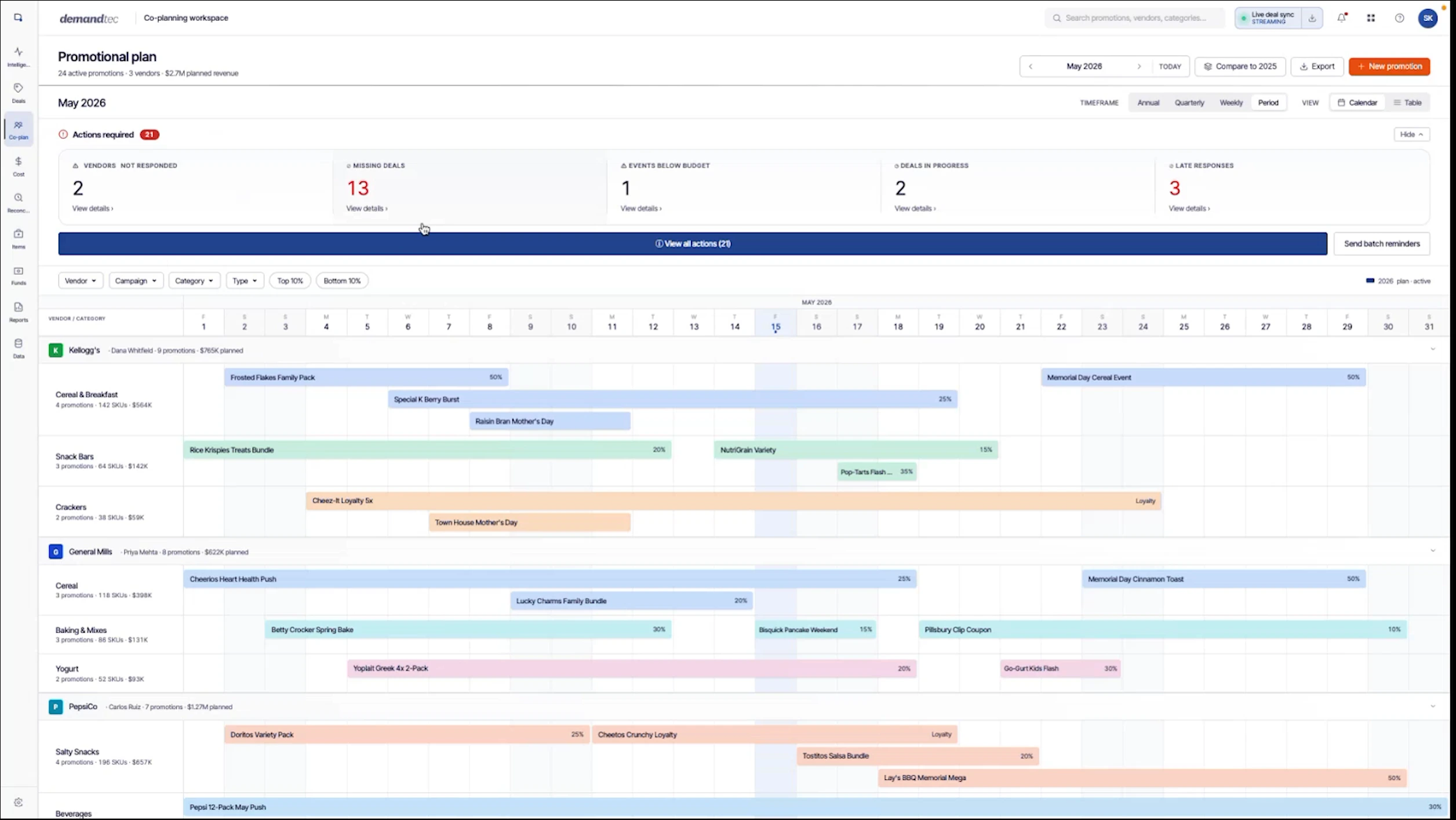
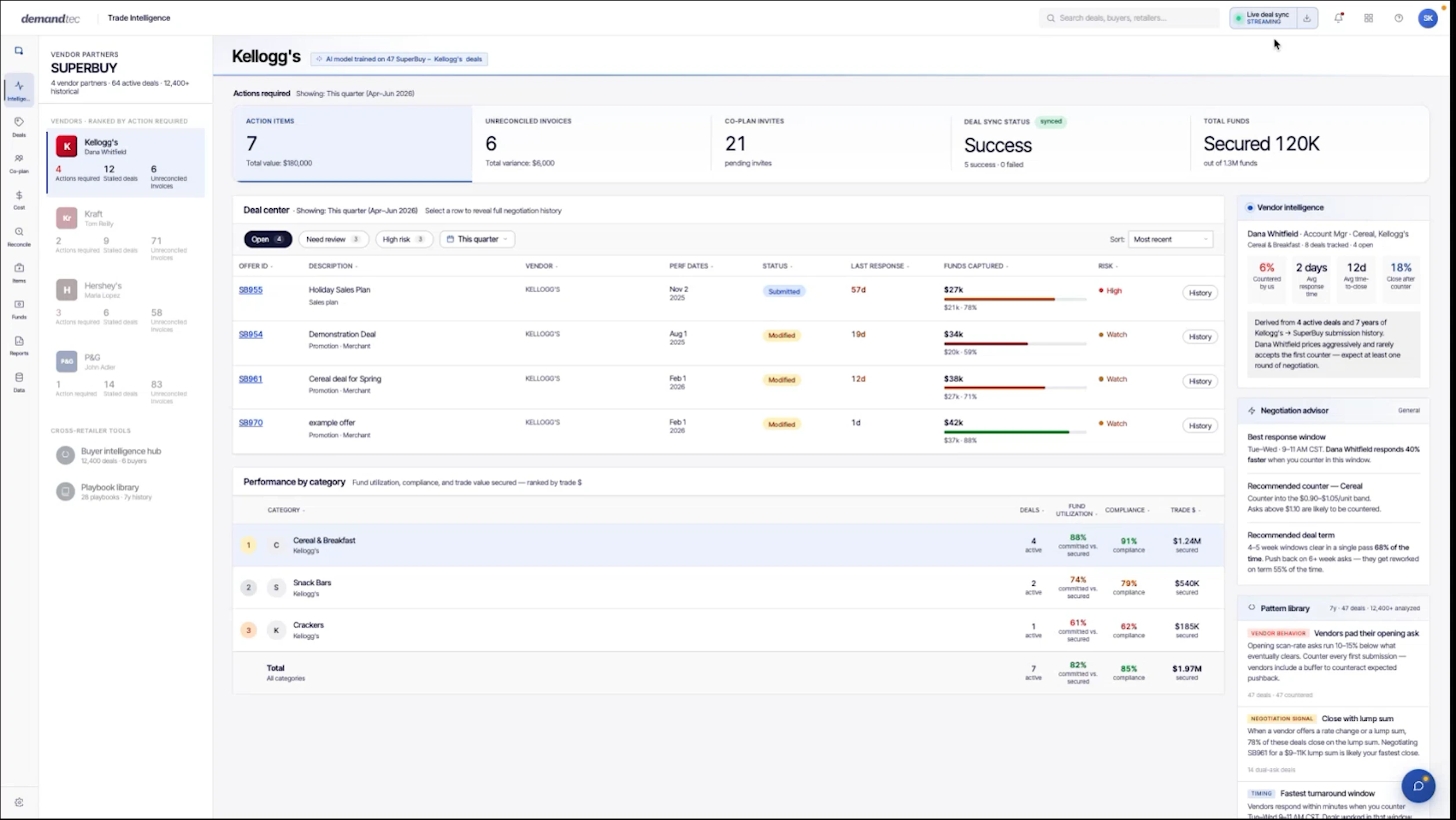
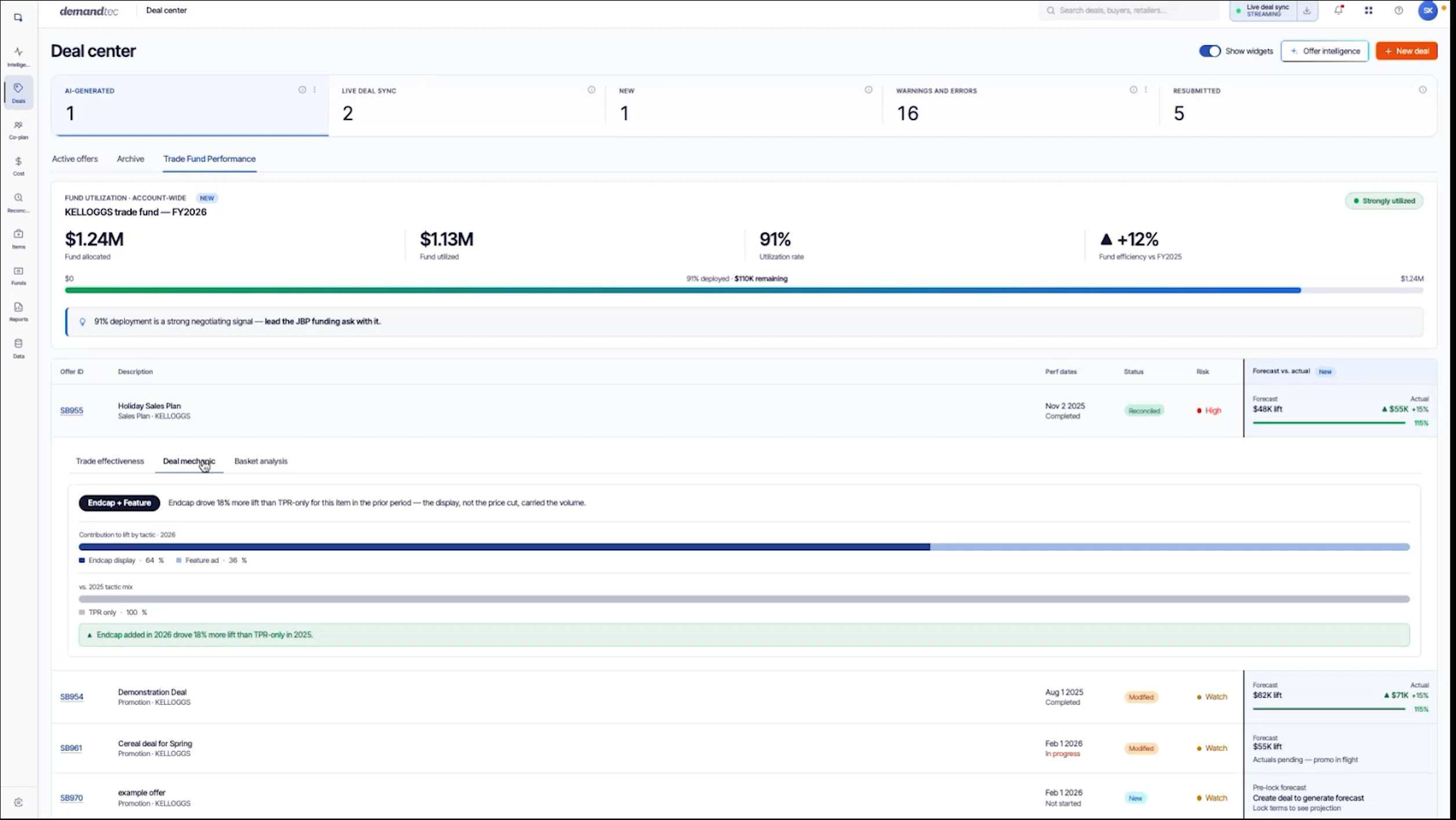
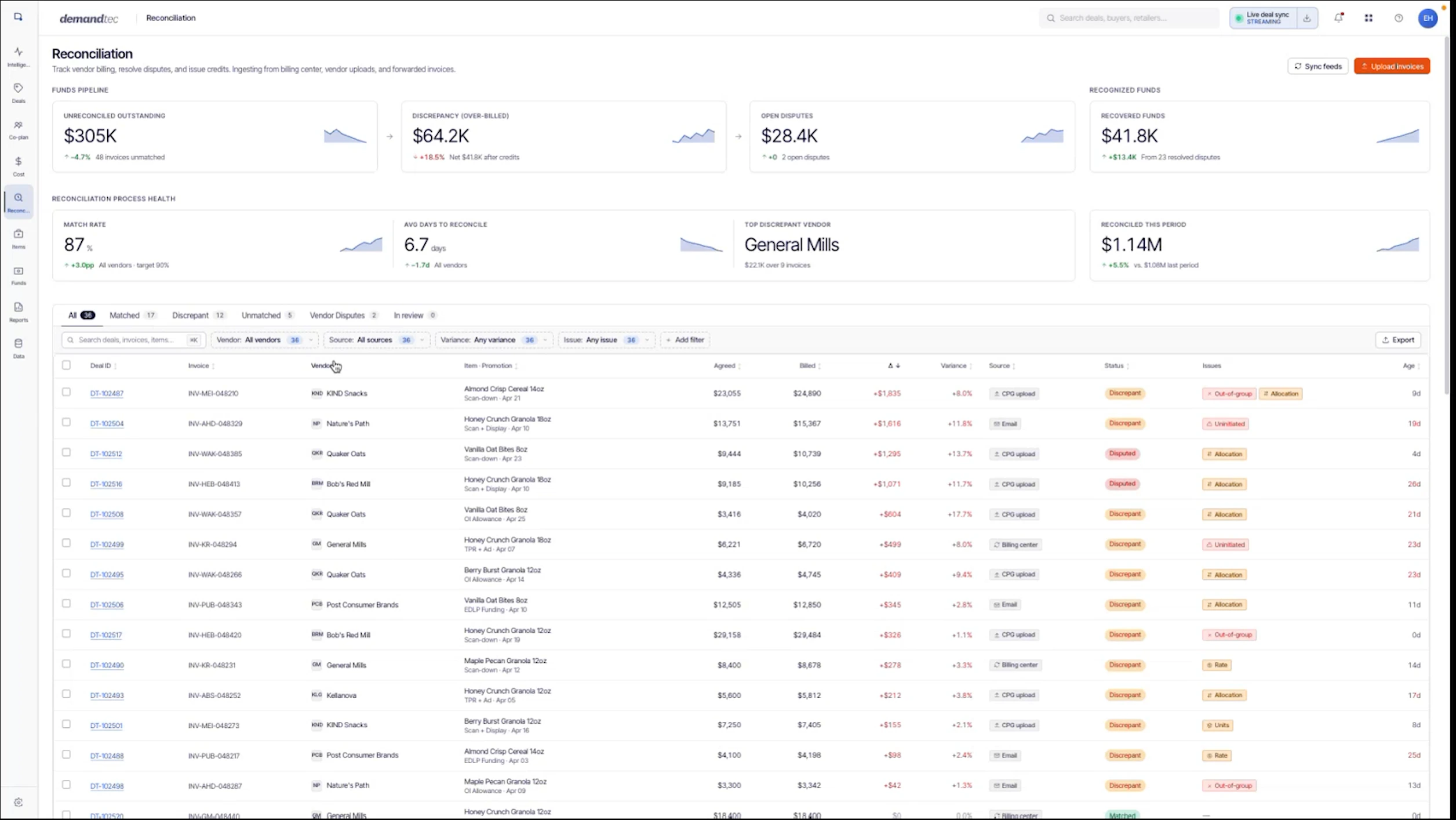
Shown with illustrative data for the fictional SuperBuy retailer. Trade Performance is a suite of the DemandTec Commercial Trade Intelligence™ platform. DemandTec is named a Leader in the QKS Group SPARK Matrix™: Global Trade Promotion Management & Optimization, 2026. Read the analyst report
What changes for retail teams
For category and merchandising teams
-
One calendar, not a dozen spreadsheets: Conflicts and overlaps surface in the plan, not through manual checks.
-
Plans grounded in funding commitments: Teams can distinguish confirmed supplier funding from amounts still pending before the promotion locks.
-
Earlier warning on shortfalls: Funding gaps and risks of underperformance become visible while there is still time to act.
For supplier conversations
-
Shared evidence: Both sides look at the same figures, which shortens the reconciliation that follows each deal.
-
A stronger case for trade funding: Teams can connect funding requests to specific promotional plans and performance targets, giving suppliers a clearer basis for investment.
The Bottom Line
Retail teams have spent years negotiating better deals without a reliable way to know whether those deals would hold up between the handshake and the shelf. The Co-Planning Calendar gives retailers and their CPG vendors one shared place to plan, fund, and adjust against the same live data. That is how CTI moves the point of visibility earlier, ahead of the lock date, and takes the paradox out of the process.
Book a walkthrough of DemandTec's Commercial Trade Intelligence platform and see what planning with your vendors looks like when both sides work from the same live data.
[1] Source: Gartner®, "Joint Intelligence: The Key to Scalable Retail — Consumer Goods Partnerships," Tom Nolan, Ellen Eichhorn, April 30, 2026
FAQ
Frequently asked questions
What is the Trade Promotion Paradox?
It is the situation where a well-negotiated trade deal still fails because funding or forecast problems become visible only after the promotion locks.
What is a Co-Planning Calendar in retail?
A Co-Planning Calendar is a shared workspace where retailers and CPG suppliers align promotional events, funding commitments, and performance targets. DemandTec's Co-Planning Calendar supports joint business planning (JBP) by helping both sides see which promotions have confirmed funding and where commitments are still pending.
How is the Co-Planning Calendar different from sharing data with suppliers?
Data sharing gives each side access to information. Co-Planning gives both sides one surface to decide and act on it together, with a common definitional layer and changes that flow into pricing and promotion.
Does Co-Planning connect to promotion decisions?
Yes. It builds on DemandTec's native integration between trade deals and Promotions, so a change to a joint plan flows into the decisions built on top of it in real time.
See it against your own trade data
The bilateral demo shows the retailer and CPG experience side by side, on one shared source of truth.