Two decades after the introduction of advanced price management and optimization technology, many grocery retailers still struggle to master the pricing practices they need to meet shopper expectations and stay competitive.
Recognizing the surging interest in how grocery retailers set prices today, DemandTec commissioned a new industry survey in partnership with Retail Systems Research. The study, Aligning Pricing & Promotion Optimization Ambition to Operational Reality, reveals that most FMCG retailers are aware of gaps their capabilities. Most recognize the need to promptly adopt new skills and techniques to stay competitive with market leaders.
Clear-eyed self-assessment
Essential to the survey were questions that asked retailers to self-rate their organizational maturity across key pricing practices. The aggregate responses reveal that respondents don’t exaggerate their capabilities but do recognize the scale of the challenge.
Fewer than one in three respondents (31 percent) claimed expert capability in customer analytics or demand forecasting and these findings topped the list (Fig. 1). Just 30 percent claim to be expert at promotion optimization or fulfillment optimization.
Fig. 1: Honesty 101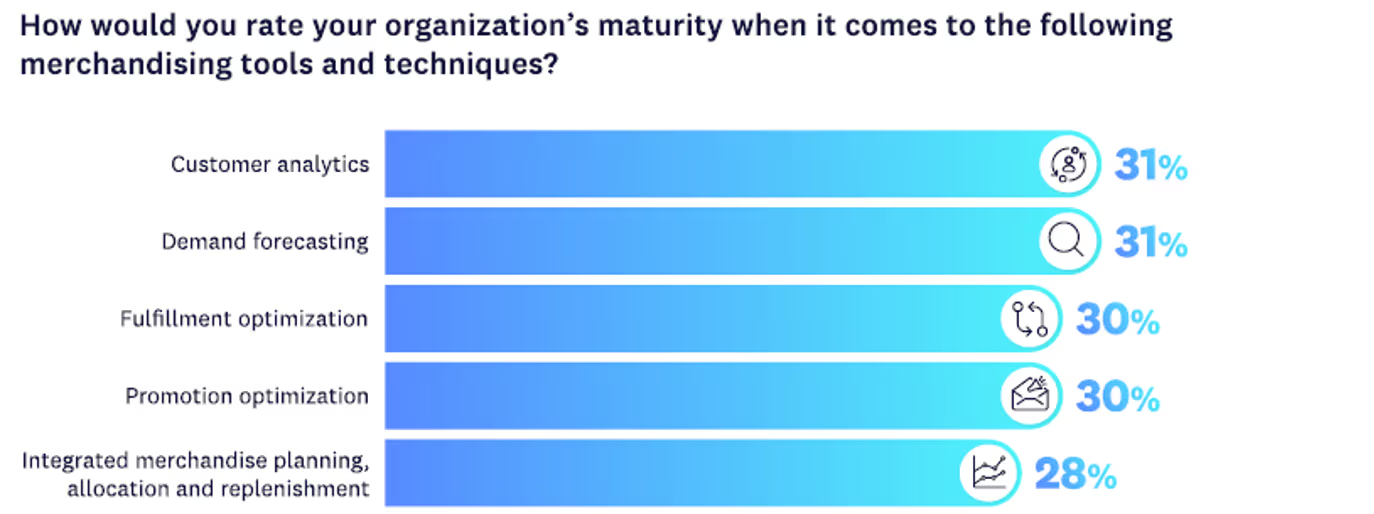
This part of the story only got less inspiring further down. When it comes to lifecycle pricing knowhow, for example, only 20 percent of retailers self-rated their organizations as “expert,” while 26 percent say they are experts at using predictive analytics for price and promotion planning.
Hard stuff, but worth doing
It may be argued that this tough self-assessment by retailers is healthy. It also conveys an awareness that pricing and promotion practices are complex and very difficult to master. The challenges are many, and the study respondents were clear-eyed about this too.
The hardest pricing problem they face every day is “determining what to change a price to.” which was cited as a top-three challenge by 44 percent of retailers (Fig. 2). Forecasting the impact of base price or promotion price changes is another top challenge, cited in the top-three by 36 percent of respondents.
Fig. 2: Houston, we have a problem.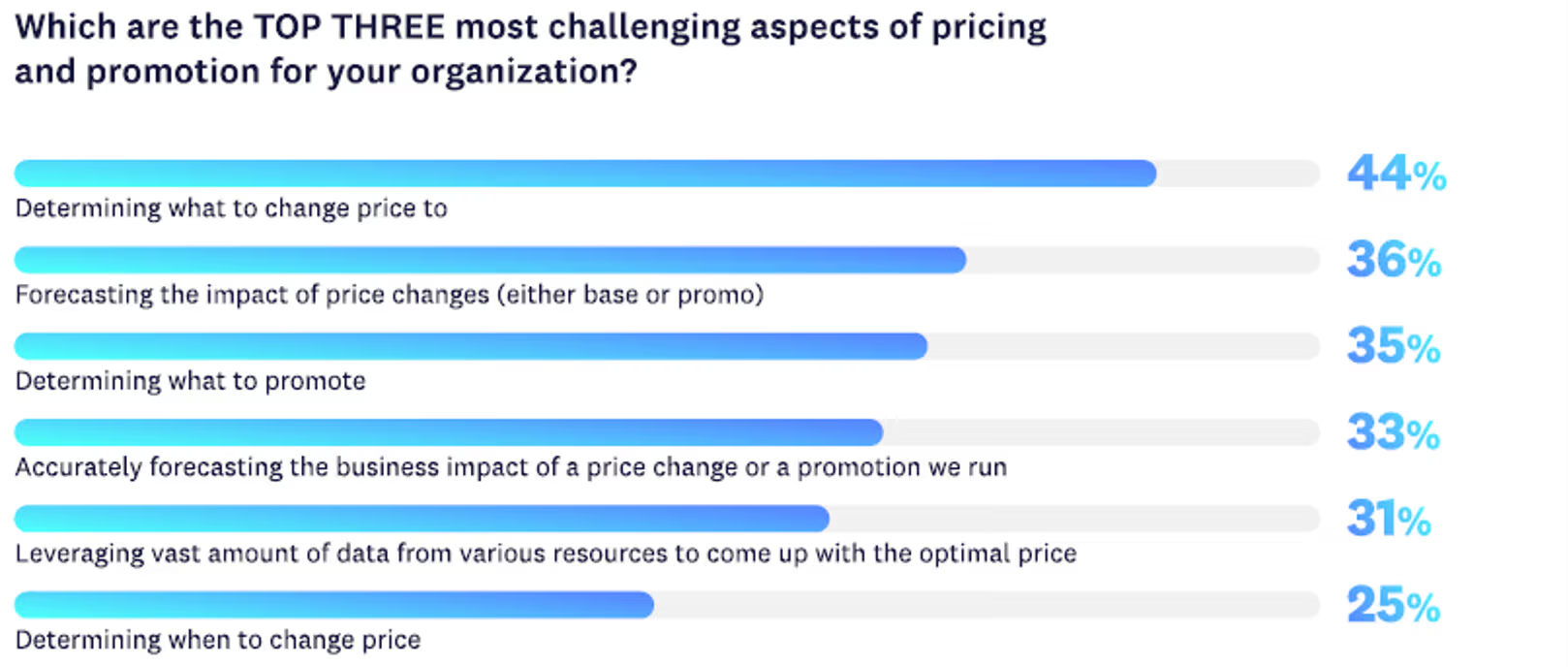
Respondents grapple with many other aspects of the overall pricing and promotion discipline. Leveraging large data sets present a challenge (31 percent) while timing – determining when to make a price change – is a top-three headache for 25 percent of retailers.
The take-away from this is that it’s all hard stuff for retailers who don’t possess the right combination of solutions and methodology to support excellent pricing and promotion practices without superhuman effort. Even market leaders find this difficult.
Market leaders have a pricing edge – Or do they?
The researchers dug into their findings to compare the responses of the very largest FMCG retailers ($5B+) to compare with the total sample. They revealed some key differences in their use of more advanced pricing practices. Market leaders say:
- Dynamic Pricing: They place a much higher value on dynamic pricing (67 percent) compared with other revenue bands among the respondents. By comparison, just 32 percent of small retailers give this top importance.
- Data Issues: This is actually a bigger challenge for them versus their smaller competitors. In the survey, 69 percent report lack of clean price, competitor, and purchase data to be a top inhibitor to better pricing.
- Price Optimization: While they are more likely to have price optimization in place as part of their total pricing solution, this is still true for only 42 percent of large retailers, versus 27 percent of retailers overall.
It appears from this survey that even market leaders concede they have work to do to put their pricing practices right.
Focus on opportunities
The broader story that emerges from the DemandTec/RSR report is one that signals significant opportunities for retailers who honestly confront their pricing and promotion challenges and move decisively to gain capabilities and assert competitive advantage.
Closing the pricing and promotion optimization gap is a critical strategic initiative. An experienced technical partner can make all the difference. Let us show you how to begin.