
Do all of your customers react the same way to pricing changes you make? We’re betting they don’t and that makes it harder to predict how the necessary pricing changes you need to make could impact your profits and more importantly, your relationship with your customers.
It’s standard industry practice to leverage past sales data, and use elasticity models to understand how changes in price impact customer demand. But not all models are created equal and it’s important to make sure you’re using the right model to deliver the insight you need to make the right price change. The choice of model used influences the level of detail in the data analysis. Price variations can be significant within a particular category and across different locations. This makes accurate data analysis crucial for retailers to deliver value and uphold consistent pricing across their stores and products.
The X factor is customer behavior. Customers are unique and respond differently to price changes as they occur, including promotional offers. Some customers have economic challenges so at a certain price point, they may be priced out and choose a different brand. Customers with fewer economic challenges may be less sensitive to price changes, but some other factor may be impacting their choice of your brand. You need a scientific model that can help you understand and predict customer behavior and account for various elasticities in a dynamic, accurate, and reliable way.
There are two common types of elasticity models: linear and non-linear. Here, we look at how non-linear elasticity models can help you to more effectively optimize pricing.
What’s the difference between linear and non-linear elasticity models?
Linear elasticity models assume that the relationship between price and demand is a straight line. This means that for every percentage increase in price, there is a corresponding percentage decrease in demand. It assumes that all of your customers will have the same economic situation, attitude, and price responsiveness. Because of this, linear elasticity models don’t account for the fact that customers have different elasticities.
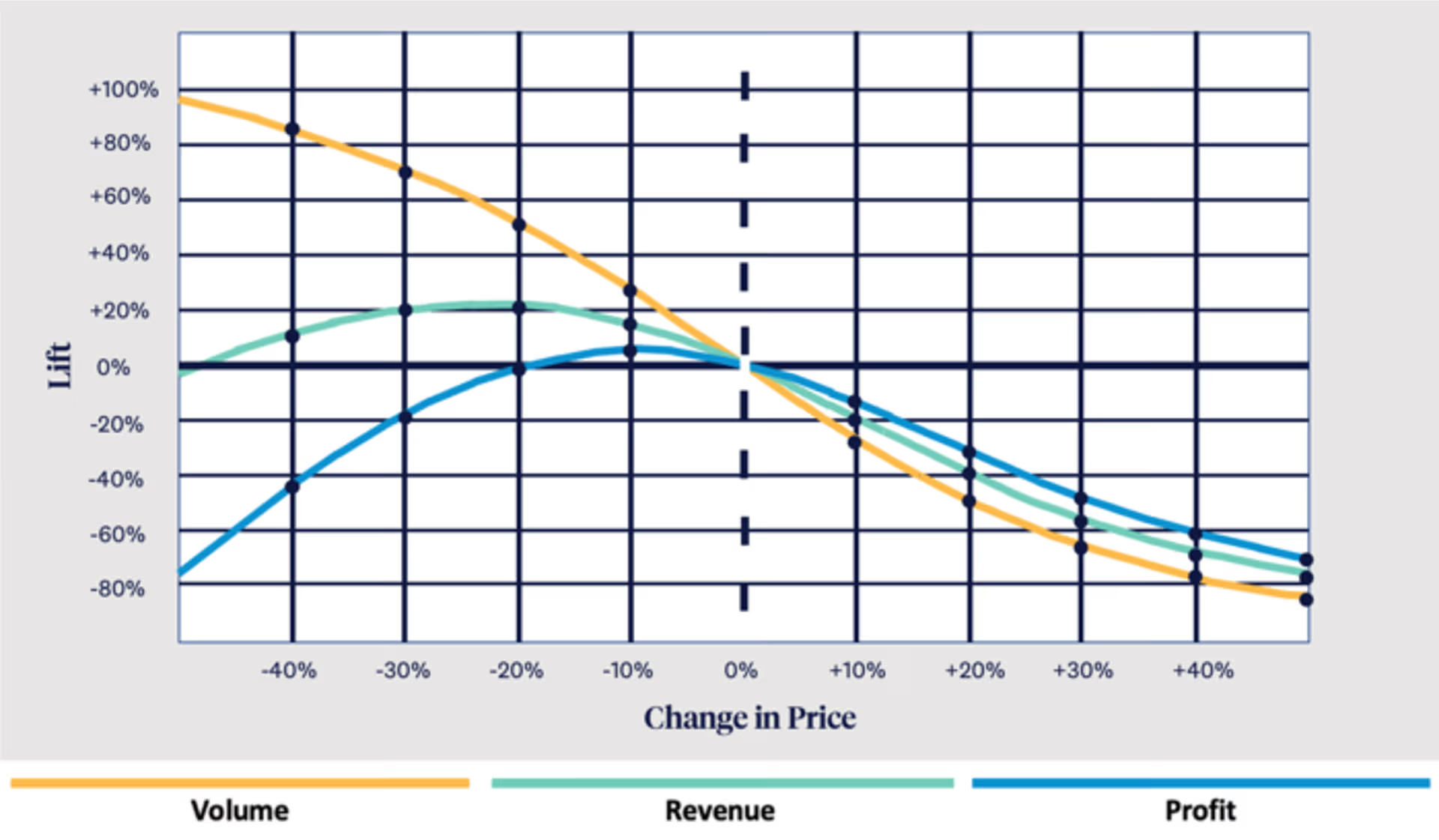
Non-linear elasticity models assume that the relationship between price and demand is not a straight line. It knows that not all customers will react the same to changes in price and can effectively demonstrate that in its model results.
The relationship between price and demand is not a straight line
4 Strategic advantages of a non-linear elasticity model for price optimization
Accurate Pricing: A non-linear elasticity model can provide a more accurate understanding of the relationship between price and demand and how it can change depending on the level of the price change. With accurate pricing and forecasting recommendations, retailers can make better decisions that increase profits.
Flexibility: The flexibility of non-linear models allows them to be tailored precisely to individual products, locations, and categories. This customization capability empowers retailers to create more effective pricing strategies that align with specific business objectives.
Better Predictive Power: Non-linear elasticity models have better predictive power than linear models taking into account factors such as brand loyalty, seasonality, customer behavior, and cannibalization.
Reduced Risk: Non-linear elasticity models can provide insights into how changes in price will affect demand before the changes are made. This means that a business can make more informed pricing decisions, reducing the risk of making pricing mistakes that can happen when using linear elasticity models.
Selecting the right pricing optimization solution
Accurate Pricing: A non-linear elasticity model can provide a more accurate understanding of the relationship between price and demand and how it can change depending on the level of the price change. With accurate pricing and forecasting recommendations, retailers can make better decisions that increase profits.