
Katrina Rey
Product & Client Success Manager, DemandTec, June 2026
Every year, retailers and CPG companies negotiate hundreds of billions of dollars in trade deals: co-op agreements, billbacks, promotional funds, and volume incentives. Across the industry that figure approaches $500 billion in annual trade spend. And yet the average account manager still spends 45 to 90 minutes building a single deal. ¹
At one mid-size CPG, that adds up to roughly 400 hours of manual deal entry per week across 20 users, the equivalent of 10 full-time employees and approximately $600,000 in annual labor cost tied to a single workflow.¹ Some companies have responded by deploying bots or offshoring the work entirely. Most are finding those workarounds introduce as many errors as they eliminate. Category managers still track promo calendars in spreadsheets that never get shared across the aisle. Finance teams spend months resolving deduction disputes, ¹ and audit prep alone can consume two to four weeks of manual document assembly.
This is not an edge case. It is the norm. The commercial relationship between retailers and CPGs remains deeply fragmented, and it is costing both sides real money.
Defining the Category
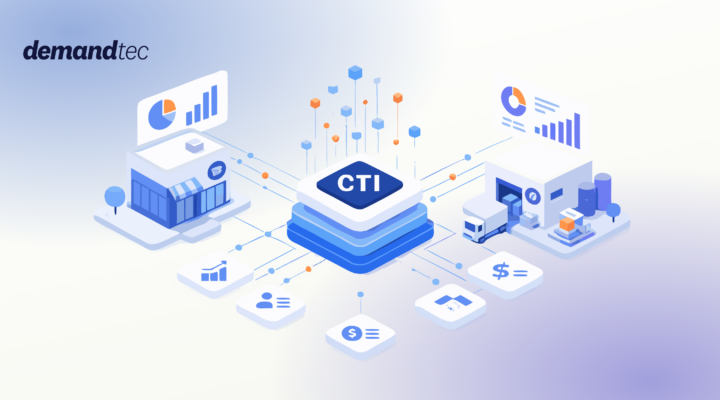
Commercial Trade Intelligence is the operating system for the retailer-CPG commercial relationship. It connects trade planning, execution, intelligence, and reconciliation into a single collaborative platform, replacing the disconnected systems, spreadsheets, and siloed workflows that define how most companies operate today.
It is the connective layer between two sides of a business relationship that have historically struggled to communicate. On the CPG side: trade strategy definition, fund allocation across co-ops and rebates, deal negotiation, and ROI tracking. On the retailer side: AI-powered pricing strategies, promotion planning and execution, and post-event performance analysis. Connecting them both is a shared, auditable deal repository with live data sync and end-to-end reconciliation.
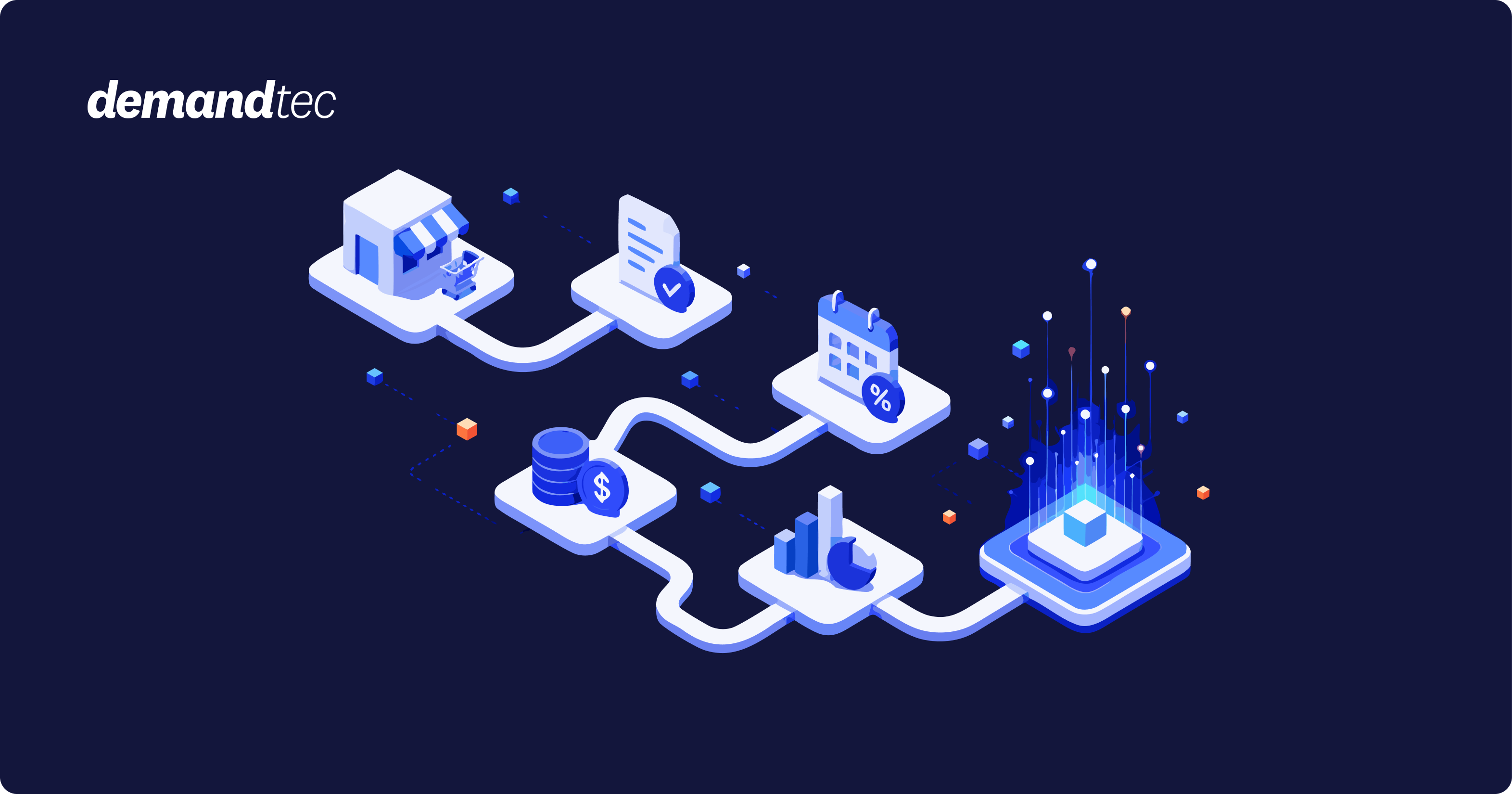
These four phases form a closed loop, each one feeding the next. Planning sets the strategy. Operations executes it. Finance reconciles what was paid against what was planned. Evaluation turns post-event performance into smarter decisions next time around. It is the joint business planning playbook built into a platform.
The Problem Commercial Trade Intelligence Solves
The core dysfunction in the market is not any single broken process. It is the absence of a shared source of truth. CPG account managers build deals inside their own systems. Retailers manage promotion calendars that never get shared back. Finance teams on both sides reconcile from different data sets. By the time anyone has a complete picture of what happened in market, the quarter is already over.
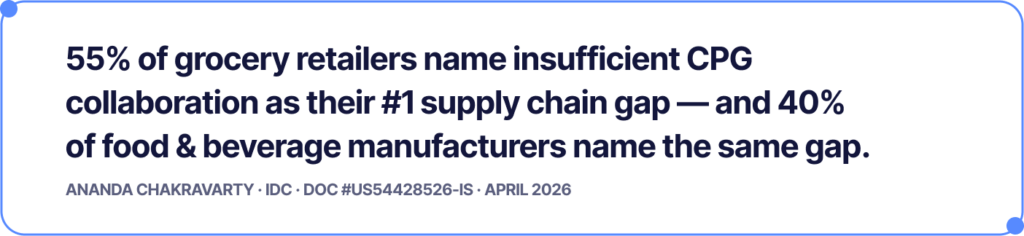
This is not a fringe complaint. According to Ananda Chakravarty, Research Vice President, Retail Merchandising and Marketing Analytics Strategies, IDC, document US54428526-IS, April 2026, 55% of grocery retailers name insufficient CPG collaboration as their number one supply chain gap, and 40% of food and beverage manufacturers name the same gap. Both sides feel it from opposite ends of the same relationship.
A Joint Business Plan starts with good intentions: shared growth targets, agreed promotional commitments, and a clear plan for the year. Then reality sets in. A promotion runs late. A funding allocation shifts without a formal conversation. By the quarterly business review, both sides are reconstructing history from memory and spreadsheets. The plan lived in one system, execution lived in another, and there was never a mechanism connecting them in real time. Nobody is deliberately misleading anyone. There is just no shared source of truth that both parties can point to and say: here is what we committed, here is where we are, here is the gap.
The stakes at the invoice level are significant. In discovery sessions, CPG finance teams described receiving bills that were hundreds of thousands, sometimes over a million dollars, off from what was committed, with no automated way to identify the discrepancy or build the case to dispute it. Every dollar recovered required manual effort. ¹
What Makes This Different
Point solutions have tried to solve pieces of this: trade promotion management tools, reconciliation platforms, analytics dashboards. What has been missing is the connective tissue, a platform that serves both sides of the relationship simultaneously, with real-time data flowing between them.
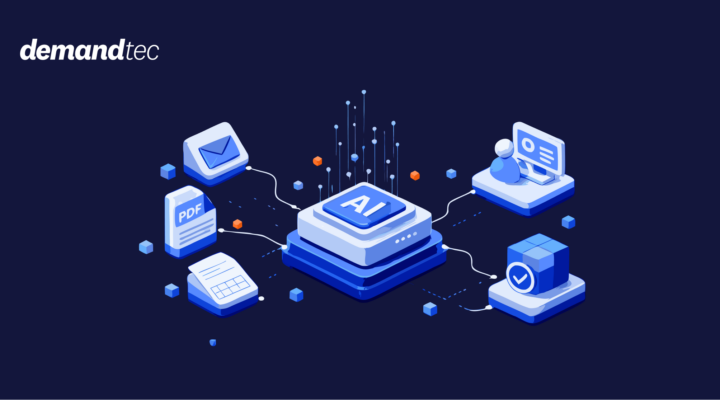
Commercial Trade Intelligence does that. Running across the entire trade lifecycle is Agentic AI, an intelligence layer that acts on the data rather than just reporting it. It manages how trade is defined, how it enters the system, and how it executes on the back end. It is not a workflow tool. It is the mechanism that delivers speed and accuracy at scale, while the people responsible for the relationship keep ownership of the decisions that matter.
Combined with 25 years of underlying demand science and one of the largest retailer-CPG networks in the industry, 7,800+ connected CPG partners across 120+ retail banners, this is the only solution that brings collaboration, trade management, and promotion planning into a single platform, purpose-built for the bilateral commercial relationship. A network of that scale takes decades to build and cannot be replicated on a product cycle.
The commercial relationship between retailers and CPGs is one of the most complex in business. Commercial Trade Intelligence exists to make it work, for both sides, in one place, together.
On June 24, we are introducing Commercial Trade Intelligence in full and showing what a genuinely bilateral platform looks like in practice. Register for the webinar. For independent validation of the collaboration gap, download the IDC Snapshot.
¹ All statistics and customer examples cited in this article are based on DemandTec customer discovery sessions.
KEY TAKEAWAYS
Commercial Trade Intelligence is the operating system for the retailer-CPG commercial relationship, connecting trade planning, execution, intelligence, and reconciliation into one collaborative platform. The core problem it solves is the absence of a shared source of truth: today both sides plan and reconcile from different data, which leaks margin and stretches settlement. CTI closes the loop across four phases (planning, operations, finance, evaluation) with Agentic AI acting across the trade lifecycle. What makes it different is that it serves both sides simultaneously, backed by 25 years of demand science and a network of 7,800+ CPG partners across 120+ banners that cannot be replicated quickly. This is the category being introduced at the June 24 webinar.
FAQ Section
Not because the data is missing. It exists. The problem is that planning, execution, and settlement data sit in separate systems that were never designed to connect, or to surface answers to the people making decisions. The result is that fundamental questions about whether a trade investment worked require a data request and a long wait, by which point the decision window has often closed.
A Joint Business Plan (JBP) is the shared growth plan a retailer and CPG partner agree to for the year, including promotional commitments and category targets. Execution drifts because the plan lives in one system, and execution lives in another, with no mechanism connecting them in real time. By the quarterly review, both sides are reconstructing what happened from memory and spreadsheets rather than working from a shared source of truth.
Commercial Trade Intelligence is a single connected platform where every commercial transaction, from the first co-planning conversation to the final reconciled claim, is connected, measured, and fed back into the next cycle. It replaces a stack of loosely integrated point tools with one architecture where a January commitment is traceable to a June execution and a September settlement, with AI running continuously across the whole chain.
It acts on the data rather than just reporting it. An agent can surface a JBP execution deviation the week it happens, flag a promotion trending toward loyalty discounting while there is still budget to adjust, and automatically close straightforward reconciliation discrepancies while escalating complex ones with full context attached. The goal is to augment commercial judgment, not replace it, so leaders make better decisions faster.