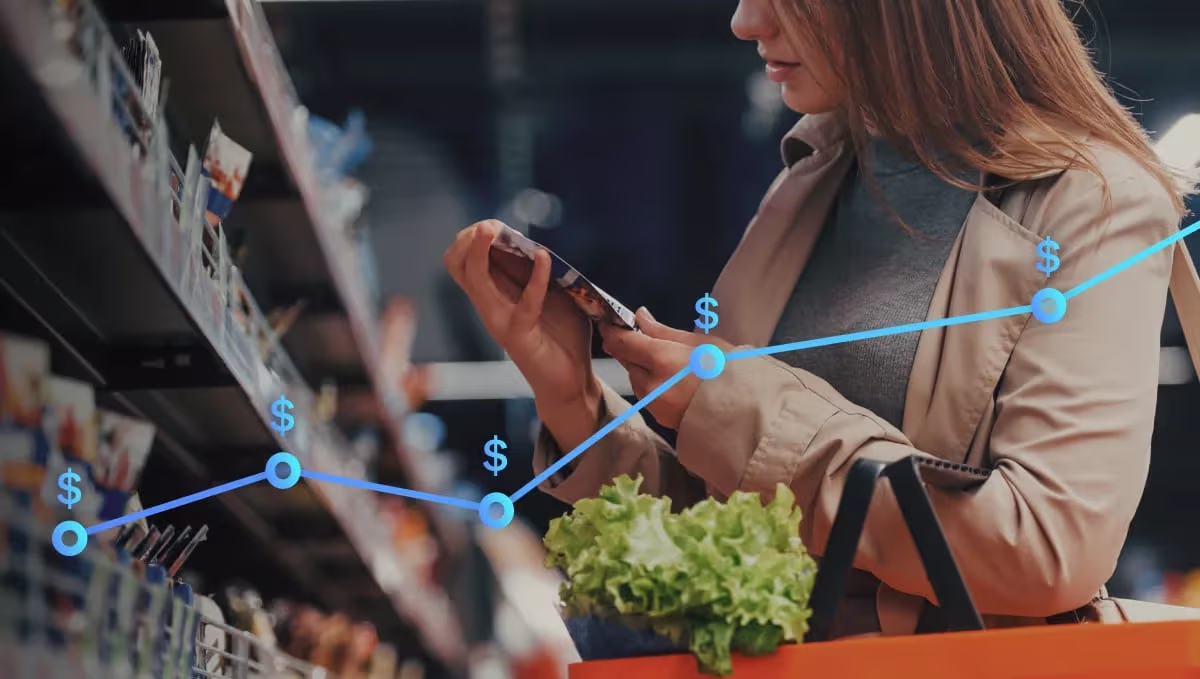
Inflation may be slowing from its 2021 peak, but grocery shoppers remain worried, and many continue to carefully manage their food budgets. They are buying more items on sale, eating more meals at home, and switching to less expensive proteins and more store brands.
A majority of grocery shoppers have stepped up their food inflation coping strategies in 2023 compared to 2022. A recent study from The Feedback Group found their top strategies include buying more items on sale (52%), eating more at home instead of restaurants (46%), and purchasing more store brands over national brands (44%).
With consumers shifting their behaviors, retailers face ongoing challenges for their strategic pricing decisions. How will you respond to the next vendor price increase or supply interruptions? Can you maintain a clear understanding of shoppers’ switching and substitution behaviors? Are you skilled at using prices to mend shopper loyalty that has been shaken by recent price jumps?
When negotiating with suppliers, retailers need empirical tools that use analytics to arrive at fact-based decisions and collaborate on promotion tactics that send the right value message.
Navigating these challenges demands pricing intelligence. An advanced software and analytic platform can serve your shoppers and keep your business strong. Here are four ways it can make a big difference:
1. Stay prepared for the fast pace of change
Speed to decision has never been more important. Retail managers must establish a reliable process to manage the sheer volume of pricing decisions. For a typical chain, that means tracking and analyzing data on 50K or more products, across dozens of zones, for millions of customers.
Time is the enemy when it comes to maintaining margins across the entire assortment. Human experts can only focus on a few dozen key item prices in a week using manual-based systems. The rest typically are ignored or managed with “rules of thumb.” Retailers need intelligent automation in place to systematically read and react to external changes and make informed pricing decisions.
2. Understand the whole financial impact of planned strategies
Where cost increases undermine margins on core items, it is even more important to identify profit opportunities that may be overlooked with other less-sensitive items. With the right systems in place, there is money to be made in the margins. As we like to say, “That’s where the winning happens.”
Where shoppers are already switching, store brands can be a vital vehicle to support total margins while relying less on price promotions. Granularity of decision making is a strategic advantage in this context. It provides the ability to rapidly evaluate a larger set of pricing options and identify opportunities to support total store profitability. Improved forecast accuracy can be worth millions to the bottom line.
3. Negotiate smarter deals with data in-hand
Retailers face a dilemma regarding how hard to push back on the next round of supplier price increases. What fact-based reasoning can they present? What incentives should they demand from suppliers?
Promotional funds from the larger suppliers remain an essential part of the collaboration. They may be productive in isolation, but sometimes it can be challenging to evaluate their total impact on shopper response.
Pricing intelligence can enable trading partners to see the larger picture. When negotiating deals, intelligent analytics can help reveal where to beat the market together. It can steer the conversation toward ways to break out of stale patterns to find better timing, smarter deals, and more effective prices.
4. Remember that merchandising still has a margin impact
When looking to boost overall margins, retailers do well to consider other reliable alternatives to price promotions. Ads and display promotions still belong in the mix. In the best circumstances, they can deliver incremental volume and profits without discounting: Put the deal on the front page. Time an event to get them in the door sooner to buy holiday items.
It can also be effective just to co-locate displays. It seems intuitive to promote pasta and sauce together, for example. Or toothpaste and toothbrushes together.
Merchandising tactics are easier to plan and implement within categories. They can be harder to coordinate across departments – think cookies with milk – but intelligent systems open the door to these possibilities, too. What matters is the ability to measure how co-promoted items interact and understand basket impacts.
Unlock the power of intelligent retail pricing
Pricing continues to be both a matter of science and art. Systems, processes and intelligence are needed to automate some decisions and help humans optimize the rest. To succeed in a dynamic environment, retailers must deploy end-to-end solutions that enable them to plan strategies, execute them into the downstream application and understand their financial impact. By connecting analytics with implementation and building models that learn – so do your people tasked with managing prices. The science can improve the art of merchandising.
Just because inflation seems to be moderating in the latest quarter doesn’t mean we should stop thinking about it. We’ve just experienced a three-year wakeup call. Soft landing or not, the times call for a more empirical, more agile and more shopper-driven pricing discipline that incorporates scientific pricing optimization. DemandTec provides the operating system for automating these decisions.