
Vish Kirpalani
Chief Product Officer, DemandTec, June 2026
In my last post, I talked about the era of the point solution being over, and how collaboration is the lynchpin connecting a modern commercial ecosystem. If you buy that argument, the natural next question is where exactly the absence of that connected system is costing you the most.
For most commercial organizations I talk to, the answer is trade spend, every time. Retailers and CPG manufacturers collectively invest hundreds of billions annually in trade promotion. And yet when I sit across the table from commercial leaders, VPs of Merchandising, Category Directors, Chief Revenue Officers, Heads of Trade Marketing, I keep running into the same five questions nobody can answer with any real confidence. Not because the data doesn’t exist. It does. It’s because that data is sitting in disconnected systems that were never designed to talk to each other, or to the people making the decisions.
These aren’t edge-case analytics problems. They’re fundamental questions about whether a trade investment is actually working. And the fact that most organizations can’t answer them tells me the commercial technology stack is broken in a way that dashboards and BI tools are never going to fix.
THE FIVE QUESTIONS
Question 1: Where in our portfolio is trade spend driving incremental growth, and where is it just subsidizing volume that would have happened anyway?
I’ve seen this more times than I can count. A trade review goes deep on total spend, total volume, and percent of sales. What it almost never does is separate the promotional lift that genuinely moved the needle, new shoppers, category expansion, real incrementality, from the baseline volume that was coming regardless. The promotion just discounted it.
The consequence? Trade dollars get renewed year over year based on relationship, habits, and whoever blinked first in the negotiation. Commercial leaders are making billion-dollar investment decisions with the same analytical depth they had a decade ago, often without realizing it.
This is one of the clearest problems AI can solve in a meaningful way. When trade fund commitments are connected to transaction-level performance data, a well-designed platform surfaces, automatically and continuously, which investments are generating real commercial return, and which are quietly eroding margin. That’s not a reporting upgrade. That’s a strategic reallocation capability that changes the entire CPG conversation.
Question 2: Is our Joint Business Plan being executed as committed, or has execution quietly drifted from what both parties agreed to?
Every JBP starts with good intentions. Shared growth targets agreed on promotional commitments, a clear plan for the year. Then reality sets in. A promotion runs two weeks late. A funding allocation shifts without a formal conversation. A category target that was ambitious in January becomes quietly irrelevant by June.
The problem isn’t that teams aren’t trying. It’s structural. The plan lives in one system; execution lives in another, and there’s no mechanism connecting them in real time. By the time the quarterly business review rolls around, both sides are reconstructing history from memory and spreadsheets. Nobody is deliberately misleading anyone. There’s just no shared source of truth that both parties can point to and say: here’s what we committed, here’s where we are, here’s the gap.
The commercial leaders who’ll win the next decade are those whose JBP isn’t a document that gets filed after the signing meeting. It’s a live operating system. One that reflects what’s actually happening in the market week to week, flags when execution drifts from commitment while there’s still time to do something about it, and drives the right conversation at the right moment rather than waiting for a review meeting that arrives too late to matter.
Question 3: Are we building our promotional offers around what the data says will grow the category, or what we negotiated last year?
The annual planning cycle is one of the most consequential commercial processes in retail. It’s also, in my experience, one of the most backward-looking. Offers get built from last year’s template and adjusted at the margins based on who had more leverage in the room. What almost never makes it into that conversation is a forward-looking view, grounded in actual demand science, of which promotional mechanics, at which price points, with which CPG funding structures, are most likely to grow the category in the coming year.
When co-planning recommendations are grounded in real demand signals and live trade fund availability, the conversation changes. You’re not defending the past. You’re designing the future together. And the offer that comes out the other side is built on evidence, not precedent.
Question 4: When a promotion runs, do we understand how shoppers engaged with it, and whether it built category value or just rewarded the people who were going to buy anyway?
A promotion executed is not a promotion understood. Those are two very different things, and the gap between them is where a lot of commercial learning gets lost.
There’s a real difference between a promotional event that genuinely expands a category, bringing in new shoppers, driving trial, shifting competitive share, and one that simply discounts your most loyal buyers at a cost to margin. Both can look identical on a volume report. Most organizations can’t make that distinction quickly enough to act on it, because the data lives in different places and arrives on different timelines. By the time a post-event analysis is complete, the next promotion is already in flight. When post-event evaluation becomes a real-time input to the planning process, not a retrospective report, the next JBP is genuinely informed by what the last cycle actually taught you. That’s when the commercial process starts compounding rather than just repeating.
Question 5: At the end of a promotional period, do we actually know whether what was committed was delivered, claimed correctly, and settled in a way both parties agree on?
This is the unglamorous end of the commercial value chain. It’s also where a quietly staggering amount of margin disappears.
I’m not talking about fraud or bad actors. I’m talking about the accumulated gap between what was committed, what was executed, and what ended up being claimed, multiplied across hundreds of CPG trade programs running simultaneously, across multiple banners, over the course of a year. Most finance teams have a sense of the scale of this problem. Most commercial teams treat it as someone else’s problem until the supplier relationship starts to fray and suddenly it becomes theirs very much.
Closing this gap through automated reconciliation, matching fund commitments to executed promotions, flagging discrepancies in real time before they calcify into disputes, is not a nice-to-have. It is a margin protection capability. And it’s the mechanism that completes the commercial value chain, from the first co-planning conversation all the way through to a settled claim that both the retailer and the CPG manufacturer can stand behind.
THE UNDERLYING PATTERN
What Connects All Five Answers
What strikes me about these five questions is that they all point to the same underlying failure: a commercial process that was never designed to be end-to-end. Planning happens in one place. Execution happens somewhere else. Settlement is its own separate ordeal. And shopper insight, the signal that should be reshaping the next cycle, often never makes it back into the room where the next plan gets built.
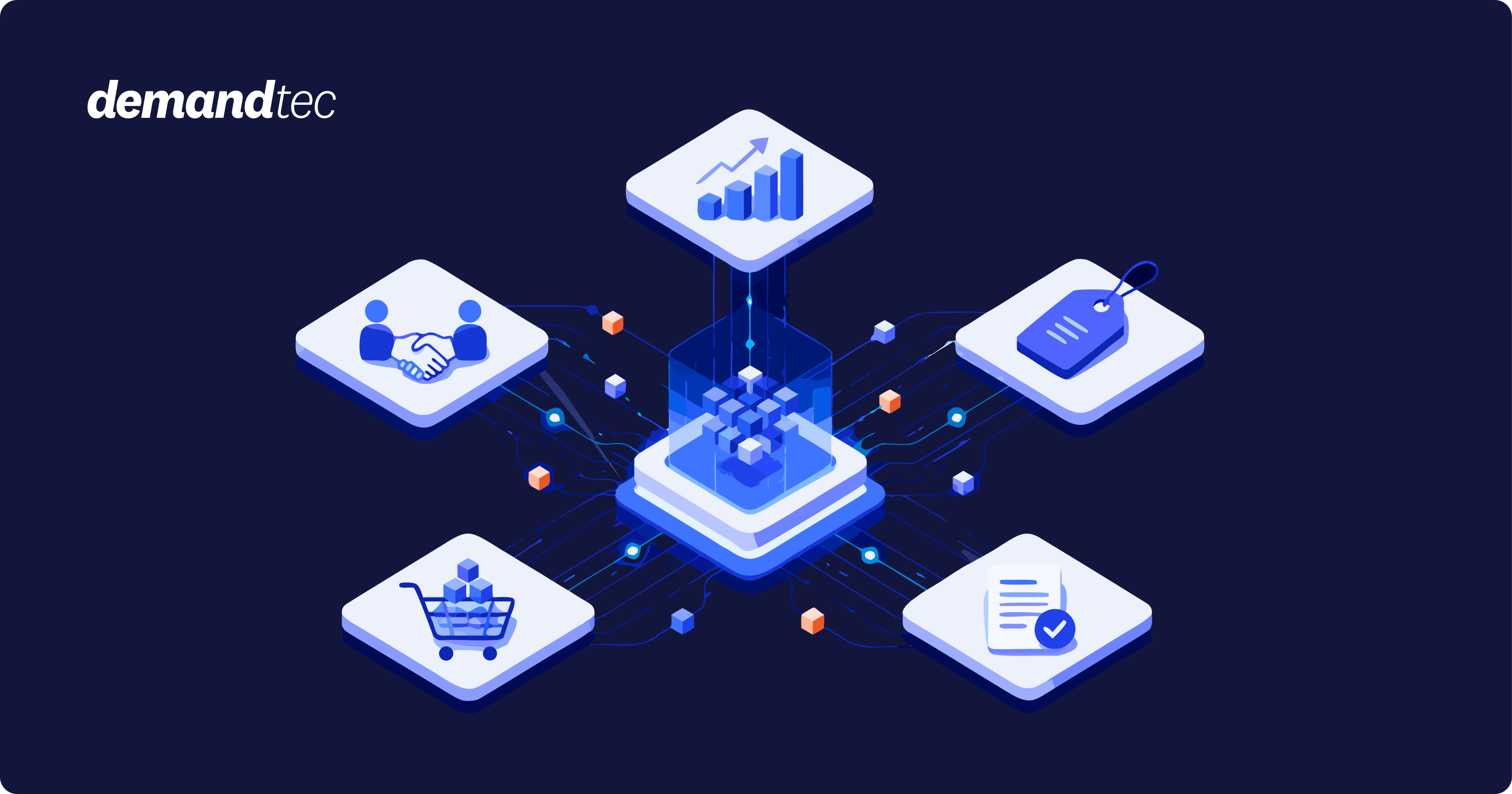
The architecture that actually answers all five questions isn’t five better tools. It’s a single connected platform where a JBP commitment made in January is still traceable to a promotional execution in June and a settled deduction in September. Where AI is running across that entire chain continuously, not generating a quarterly report, but surfacing the right signal at the moment, you can still act on it.
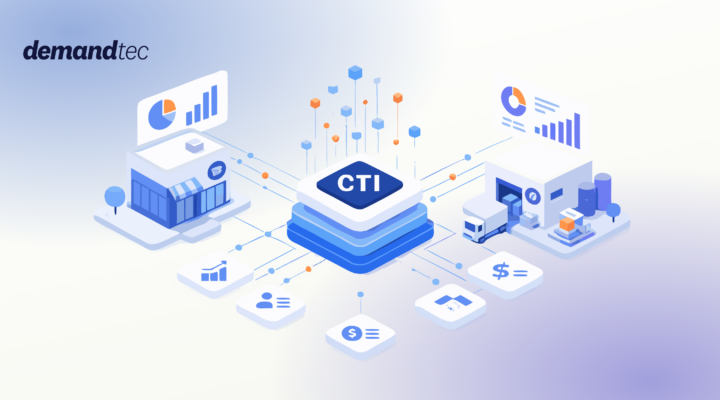
That’s the architecture of Commercial Trade Intelligence. Not a loosely integrated collection of best-of-breed modules, but a platform where every commercial transaction, from the first offer built in a co-planning session to the final reconciled claim, is connected, measured, and fed back into the next cycle.
WHY AI IS NOT OPTIONAL
The scale problem that makes agentic AI necessary
I want to be honest about the scale problem. A large grocery retailer might be managing hundreds of CPG trade programs simultaneously, across multiple banners, with promotional calendars that stretch 12 to 18 months forward. The idea that a team of analysts working in disconnected systems can keep meaningful visibility across all of that in real time is simply not realistic. The data volume alone makes it impossible.
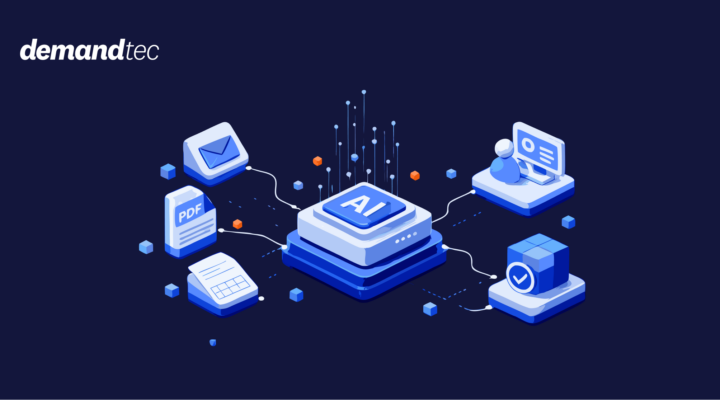
This is where agentic AI becomes genuinely useful rather than just conceptually interesting. An agent monitoring JBP execution can surface a meaningful deviation the week it occurs, not the quarter it compounds into a problem. An agent watching promotional engagement can flag an event that’s tracking toward loyalty discount rather than category expansion while there’s still budget in flight to adjust. An agent managing trade fund reconciliation can close straightforward discrepancies automatically and escalate the complex ones to the right person with full context already assembled.
The goal isn’t to automate the commercial process. It’s to give commercial leaders the intelligence they need to make better decisions faster, and to stop spending their time chasing data that a well-designed system should be surfacing for them automatically. The five questions above shouldn’t require a data request and a two-week wait. They should be answerable at the moment the decision is being made.
These Questions Are the Starting Point, Not the Destination
If your organization can’t answer these five questions today, that’s not a reflection of the people. It’s a reflection of architecture. The commercial technology stack most organizations are running was built for a world where planning, execution, and settlement were separate functions. That world still exists organizationally for many companies. But the technology doesn’t have to mirror it.
What we’re building at DemandTec is a commercial platform designed around the way the process actually works when it works well, as one connected end-to-end loop, from the first co-planning conversation to the final settled claim, with AI embedded throughout and shopper intelligence feeding back into the start of the next cycle.
These five questions are where the conversation starts. On June 24, we are taking it further. Register for the webinar where we introduce Commercial Trade Intelligence in full and show what a genuinely bilateral, connected commercial platform looks like in practice.
KEY TAKEAWAYS
Most commercial leaders cannot confidently answer five fundamental questions about their trade spend: where it drives incremental growth versus subsidizing baseline volume, whether the Joint Business Plan is executing as committed, whether offers are built on demand data or last year’s negotiation, whether shoppers actually engaged in a value-building way, and whether what was committed was delivered, claimed, and settled correctly. The reason is not a people problem. It is an architecture problem. Planning, execution, and settlement live in disconnected systems. The fix is not better reporting. It is a single connected platform, with agentic AI running across the whole chain, which is the architecture of Commercial Trade Intelligence.
FAQ Section
Not because the data is missing. It exists. The problem is that planning, execution, and settlement data sit in separate systems that were never designed to connect, or to surface answers to the people making decisions. The result is that fundamental questions about whether a trade investment worked require a data request and a long wait, by which point the decision window has often closed.
A Joint Business Plan (JBP) is the shared growth plan a retailer and CPG partner agree to for the year, including promotional commitments and category targets. Execution drifts because the plan lives in one system, and execution lives in another, with no mechanism connecting them in real time. By the quarterly review, both sides are reconstructing what happened from memory and spreadsheets rather than working from a shared source of truth.
Commercial Trade Intelligence is a single connected platform where every commercial transaction, from the first co-planning conversation to the final reconciled claim, is connected, measured, and fed back into the next cycle. It replaces a stack of loosely integrated point tools with one architecture where a January commitment is traceable to a June execution and a September settlement, with AI running continuously across the whole chain.
It acts on the data rather than just reporting it. An agent can surface a JBP execution deviation the week it happens, flag a promotion trending toward loyalty discounting while there is still budget to adjust, and automatically close straightforward reconciliation discrepancies while escalating complex ones with full context attached. The goal is to augment commercial judgment, not replace it, so leaders make better decisions faster.