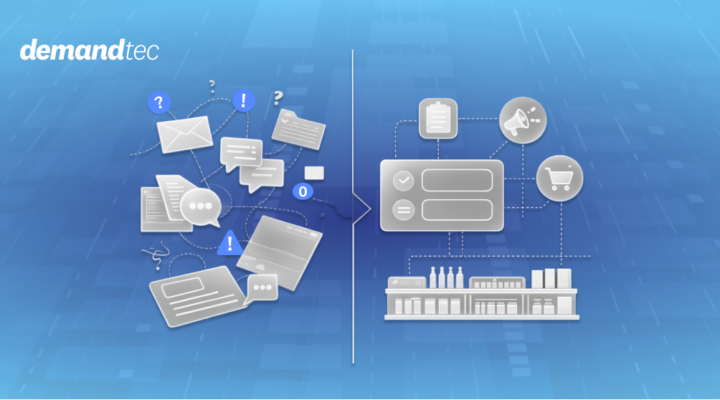

Most retailers don’t have a margin problem. They have a coordination problem.
Pricing teams are optimizing base price. Promotion teams are running events to protect volume. Trade teams are funding deals with CPG partners. Each function is doing its job. And yet margin keeps slipping.
The reason is not bad strategy. It is that these three disciplines operate on separate timelines, with separate data, and separate definitions of success. The gaps between them are where profitability quietly disappears.
This is the handoff problem. It is structural, not situational. It shows up in the P&L weeks after decisions were made, when there is nothing left to do but explain the miss.
What Handoff Leakage Actually Is
Handoff leakage is what happens when a decision made in one function affects the margin outcome of a decision made in another, without the second team knowing. The damage is not dramatic. It accumulates.
It is not always a pricing error. It is not always a bad promotion. It is the result of two rational decisions colliding in execution because neither team had visibility into what the other was doing.
Three handoffs create the most consistent margin erosion for grocery and convenience retailers:
- The base price to promotion handoff
- The trade commitment to forecast handoff
- The vendor funding to markdown handoff
Each one is preventable. None of them are rare.
The Three Highest-Risk Handoffs
Handoff 1. Base Price Changes That Miss Active Promotions
A pricing team adjusts base price across a category to recover input costs. The change is sound. But the promotion event for that category was locked three weeks earlier. The promotional depth was set against the previous base price. Now the retailer is running a deeper effective discount than planned.
The promotion team did not know the base price had changed. The pricing team did not know the event was locked. Both decisions were correct inside their own system. Together, they eroded margin.
Handoff 2. Trade Commitments That Arrive After the Forecast Is Set
A vendor submits a trade deal. The funding is approved and logged. But the promotional forecast for that product was built two weeks earlier, before the trade commitment existed. The volume plan does not reflect the deal. The trade spend is not aligned to expected lift.
When the promotion runs, the investment looks inefficient. Not because the deal was bad, but because the forecast and the funding were never in the same room.
Handoff 3. Markdowns Running Alongside Active Vendor Funding
A category team triggers a markdown on a slow-moving SKU. Correct decision for inventory management. But an active vendor deal is also funding that SKU during the same window.
Two separate investments are now accelerating movement on the same product. Neither team flagged it. Attribution blurs for both, and the true cost of the markdown becomes impossible to isolate.
Why These Leaks Are So Hard to Catch in Real Time
The challenge is not that teams are careless. It is that their systems are not built to surface cross-functional impact before execution.
Most retailers still run pricing, promotions, and trade in separate platforms or separate spreadsheets feeding separate approval workflows. By the time results appear in a consolidated report, the window to act has closed.
Post-event analysis tells you what happened. It cannot protect margin while decisions are still flexible. The symptoms are familiar to any merchandising leader or finance executive reviewing a period-close report:
- Promotional events that performed on volume but underdelivered on margin
- Trade investments that looked reasonable individually but produced weak aggregate ROI
- Pricing changes that improved baseline economics but did not show up in executed margin
These are not isolated failures. They are the predictable output of three functions operating without a shared view.
What Closing the Loop Actually Looks Like
A closed-loop approach does not add approvals or slow execution. It connects the decision surfaces that already exist so a change in one area immediately shows its impact on the others, before execution.
In practice, this means:
- When base price changes, active promotional events recalculate against the new floor automatically
- When a trade deal is committed, the promotional forecast updates before the event plan is finalized
- When a markdown is triggered, the system flags any concurrent vendor investments on the same SKU
The result is not perfect coordination. It is earlier visibility. Teams still own their decisions, but those decisions are made with awareness of what is happening downstream.
For merchandising leaders, this means fewer margin surprises at period close. For finance, it means the P&L reflects what was planned. For category managers, it means trade investments can be evaluated against promotional outcomes in real time.
This is the operating model DemandTec’s lifecycle pricing platform is built around: one connected system unifying pricing, promotions, markdowns, and trade collaboration across 7,800 connected CPG partners and 120 retail banners.
See the Closed-Loop Model in Action
If your team is experiencing unexplained margin erosion after promotions, inconsistent trade ROI, or pricing changes that seem correct individually but underperform collectively, the issue is almost certainly structural.
Register for The Margin Squeeze Playbook for 2026, a live webinar with Progressive Grocer on March 24 at 11:00am ET. Fred Cartwright, SVP of Sales at DemandTec, and Eric Odens, VP of Solutions Engineering, will walk through the lifecycle pricing model, show where coordination failures hide, and outline what a connected approach looks like in practice.
Conclusion
Margin leakage is not a pricing problem. It is not a promotion problem. It is not a trade problem.
It is a coordination problem. And it hides in the handoffs.
The retailers that protect margin in 2026 will not be the ones with the best algorithm in any single function. They will be the ones with the clearest view across all three, before execution, when there is still time to act.
Register for the March 24 webinar with Progressive Grocer to see how the closed-loop model works in practice.
Key Takeaways / TL;DR
- Most retail margin leakage is not a strategy failure. It is a coordination failure between pricing, promotions, and trade functions.
- Three handoffs carry the highest risk: base price changes that miss locked promotions, trade commitments that arrive after forecasts are set, and markdowns that run alongside active vendor funding.
- Post-event analysis cannot protect margin. Visibility must exist before execution, while decisions are still flexible.
- A closed-loop model connects decision surfaces so a change in one area immediately shows its impact on the others, without adding approval layers or slowing teams down.
- DemandTec’s lifecycle pricing platform unifies pricing, promotions, markdowns, and trade collaboration across 7,800 connected CPG partners.
FAQ Section
What is handoff leakage in retail pricing?
Handoff leakage is margin erosion that occurs when a decision made in one function affects the outcome of a decision made in another, without the second team having visibility into the change. It is structural, not the result of individual errors.
Why do pricing, promotions, and trade decisions create margin leakage?
These three functions typically operate on different timelines, in separate systems, with separate success metrics. When they are not connected, individually correct decisions can combine in ways that quietly erode margin, and the impact only becomes visible after execution.
What is a closed-loop pricing model?
A closed-loop pricing model connects pricing, promotions, markdown, and trade fund decisions in one system so that a change in any one area immediately surfaces its impact on the others. The goal is earlier visibility, not more process, so teams can adjust before execution rather than explain misses after the fact.
How does trade fund management contribute to margin leakage?
Trade fund commitments are often captured in systems separate from promotional forecasts and base price decisions. When a trade deal is approved after a forecast is set, the volume plan does not reflect the funding. When a vendor deal runs concurrently with a markdown on the same SKU, neither investment can be properly attributed.
What does DemandTec do to close the loop between pricing, promotions, and trade?
DemandTec is the only end-to-end lifecycle pricing and trade collaboration platform that unifies base pricing, promotions, markdowns, and trade fund management in a single system. With 7,800 connected CPG partners and 25 years of trade collaboration expertise, DemandTec gives merchandising, finance, and category teams a shared view of margin impact before decisions are executed.